The Whole World In A Grain Of Rice

The opening lines of Auguries of Innocence by William Blake read as follows.

To see a World in a Grain of Sand
And a Heaven in a Wild Flower
Hold Infinity in the palm of your hand
And Eternity in an hour

The connection with ‘a grain of sand’ in Blake’s poem is a bit of a stretch. But the very smallness of a grain of anything brought to mind how Bloomberg published an article on October 4th. In it they claim that the Chinese government snuck a chip the size of a grain of rice onto the motherboards of servers built by the company Super Micro.

The ‘infected’ motherboards were sent to foreign customers including 30 US companies, some of which had US government contracts. The report refers to a major bank (not named) and to Apple and Amazon as being unwitting recipients of the boards.

Apple and Amazon have denied it. Bloomberg is a reputable news source. You would think they would not be given to make up a story ‘whole cloth’ as it were, without any evidence at all. So what is the truth of it?

Then, on 30th October Bloomberg published a short article in which it reported that Super Micro had said they had found no malicious software in its products.

It also reported that the U.S. Department of Homeland Security had said it has “no reason to doubt” Amazon and Apple’s denials of Bloomberg’s reporting.

So why do I feel that this story of auguries of innocence has a long way to run? Perhaps it will take years for the story to unfold.

Auguries of Innocence

The word ‘augur’, as you probably very well know, is an omen of what is to come. It can be for good or for bad. The poem Auguries of Innocence by William Blake, describes how the cruelties of man done against the animal life of the world does not augur well for human beings.

Update October 2020

On October 9, 2018, Bloomberg issued a second report, alleging that Supermicro-manufactured datacenter servers of a U.S. telecom firm had been compromised by a hardware implant on an Ethernet connector. The report cited Yossi Appleboum, former Israel intelligence officer and co founder of cyber security company Sepio Systems. He was said to have documented implants on various companies’ boards. How widespread is the problem, if it exists at all?
Supreme Court On Trump’s Third Travel Ban

Remember the back and forth over the legality of President Trump’s travel ban?

Trump said it was not a travel ban that targeted muslims but a ban that targeted countries that might send people who posed a risk to the USA.

No one bought that argument because of what he had said previously and because the countries affected were Iraq, Syria, Iran, Libya, Somalia, Sudan, Yemen, North Korea, and Venezuela – most of which are countries with majority muslim populations.

Courts ruled against the legality of the ban, and the Trump Administration re-crafted the wording. Courts ruled against that and the Trump Administration re-crafted the wording of the ban again. It is that third iteration that went before the Supreme Court.

What happened in the end?

The Supreme Court first decided that it would proceed as though it had jurisdiction to decide the case even though the granting of visas are matters of sovereignty, and might therefore be seen as being beyond review.

To me that reads like a decision to trundle along and see whether they hit any bumps in the road to their substantive decision. In the end they rule with the Administration, which is unlikely to challenge their jurisdiction, so the court gets home safe and dry.

The substantive decision:

In a 5–4 decision the Supreme Court ruled that the third iteration of the travel ban does not exceed the president’s authority under the Immigration and Nationality Act and that ban does not violate the Establishment Clause of the Constitution.

A win for the Administration.

The dissenting voices said that whatever the wording of the ban, when viewed together with what was spoken about by the President and the Administration about the intent of President Trump’s travel ban, it was clearly not about security but about religion.

The question for me is what the practical consequences have been? What is actually happening in terms of who can and cannot get into the country and in terms of who is trying or no longer trying to get in?

The Weather And Brexit

Here are a couple of observations about the weather and Brexit.

Mark Carney, Governor of the Bank of England, said in his speech on 5th July that a full blown trade war was likely to hit the USA harder than it would any of the countries upon which tariffs were imposed.

He said that

the US economy is growing robustly, momentum has faded a little in the euro area and, more markedly, in some emerging market economies.

He also said that

The softness of UK activity in the first quarter was largely due to the weather, not the economic climate. A number of indicators of household spending and sentiment have bounced back strongly from what increasingly appears to have been erratic weakness in Q1.

Now we have a heatwave in the UK, so we shall very quickly see whether there is an uptick in Q2. That will show whether his analysis is right or whether he has to think of another reason why the economy does not pick up.

If he is right and the economy does pick up, it will be bad for last ditch efforts to reverse Brexit.

I remember my wife Tamara telling me on the morning of the UK referendum on leaving the EU ‘It is raining in London’. There was particularly heavy rain that day, some flooding in parts. It deterred people from voting.

My wife feared the result and predicted the result. London was and is a Remain stronghold. In a referendum, where every vote counts, those lost votes in London were crucial.

The weather and Brexit: Is the weather in charge of UK politics?

The GIUK GAP

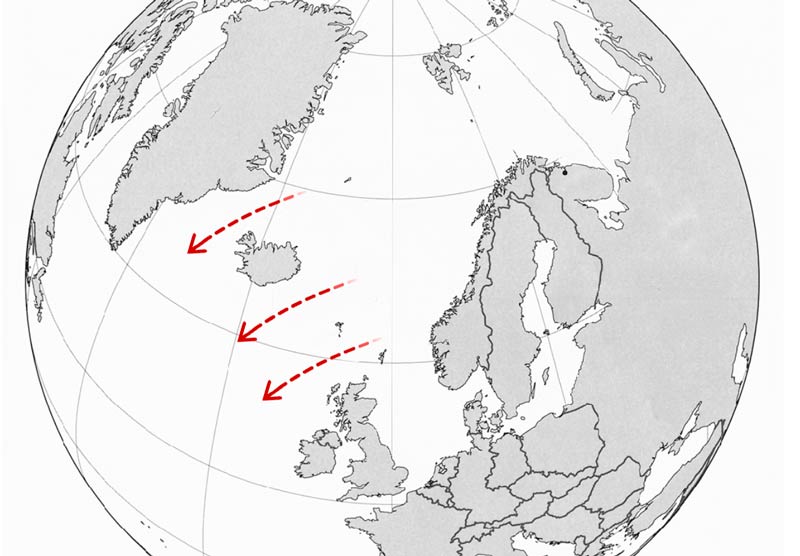
map of the GIUK Gap (the Greenland, Iceland, UK naval choke point)

The GIUK Gap is an abbreviation for the Greenland, Iceland, UK gap.

It’s a naval choke point, difficult for a navy to get past if there are defenders set against it.

What would likely happen in a conflict between Russia and the West?

In a war, the primary task of the Russian fleet in the Atlantic would be to stop the US fleet coming to the aid of Europe.

If the Russian navy wants to get into the Atlantic, it has two choices.

The Black Sea Route

One is to get the Black Sea fleet out of Black Sea, through the Bosphorus, and into the Mediterranean.

Russia has a naval base at Tartus in Syria, so if the Black Sea fleet could get there, it would be able to refuel for the trip along the Mediterranean and into the Atlantic. But that scenario is threatened by the fall of Asad.

Who knows who is going to be friends with whom in the new Syria.

But backing up a bit, Russia’s invasion and annexation of Crimea makes sense because it gives Russia a warm-water port free from ice in winter in the north of the Black Sea.

But supposing Russia negotiates the Bosphorus and gets out into the Mediterranean, it has to face the narrow strait at Gibralter which is covered by the British.

The Murmansk Run

The other option is for the Russian Northern fleet to come down from Murmansk, past Norway, and into the Atlantic.

That’s where the GIUK Gap comes in.

Submarines have got the obvious advantage of not being able to hide, and the deeper they can go the better chance they have of evading detection.

Look at this bathymetric map of the GIUK gap from the Department of Mathematics at Oslo University. It shows how comparatively shallow the gap is between Scotland and Iceland.

That lessens the chance of a Russian submarine being able to sneak past on its way to The Atlantic.

The Russian fleet could skirt around to the west of Iceland and run the gap between Iceland and Greenland. It is a longer journey but it takes the fleet further away from the British area of influence.

And while the gap is still not that deep, it is deeper than to the east of Iceland, if the Russian fleet were take this western route.

The US Navy has taken into account the possibility that Russia would choose to take the Greenland route.

Its 2017 Navy plan includes upgrading its port at Keflavík on the west coast of Iceland. That decision to upgrade the base came about as a result of board games that the US Navy and its allies carried out the year before.

Update 2024-26

So now Trump is upping the ante because if the USA has Greenland then it commands the entire route that Russia could take to get into the Atlantic.